

blog
DMD Processes for LPG Treatment in Compliance with EN 589

Advanced Technologies for LPG and Light Hydrocarbon Sweetening
Liquefied hydrocarbon gases (LHG/LPG) are widely used in the energy sector, transportation, and domestic applications and therefore must comply with strict quality requirements. One of the most important quality parameters for these products is the control of sulfur compounds, particularly hydrogen sulfide (H₂S) and mercaptans.
In addition to causing unpleasant odors, these compounds may contribute to equipment corrosion, reduce product quality, and create limitations in downstream applications. For this reason, standards such as EN 589 establish specific requirements for sulfur compounds in liquefied petroleum gases.
A range of specialized DMD (Demercaptanization) processes has been developed for the removal of sulfur compounds from hydrocarbon streams.
Using the highly active and stable IVKAZ catalyst, these technologies enable the production of treated hydrocarbon streams that can meet the required product-quality specifications.
DMD Process Family for Liquefied Hydrocarbon Gas Treatment
The DMD process family comprises catalytic technologies developed for the removal of hydrogen sulfide and mercaptans from hydrocarbon streams.
The main processes in this family include:
DMD-2M: Treatment of gas condensate and light hydrocarbon fractions
DMD-3: Treatment of straight-run gasoline and FCC gasoline
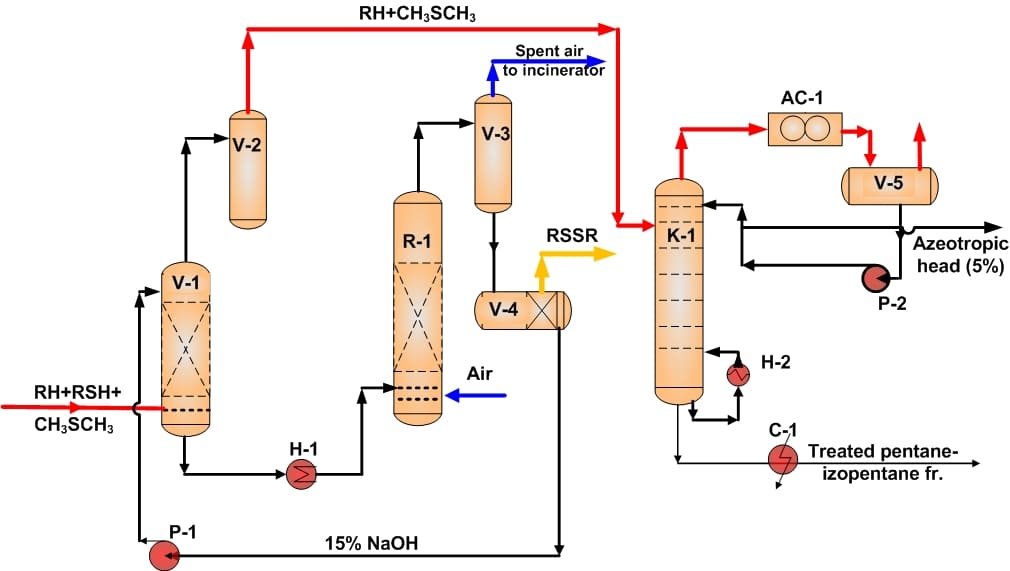
DMD-4: Treatment of pentane–hexane fractions
DMD-2: Desulfurization of light hydrocarbons using an optimized process configuration
DMD-2M Process: Treatment of Gas Condensate and Light Hydrocarbons
Application of the DMD-2M Process
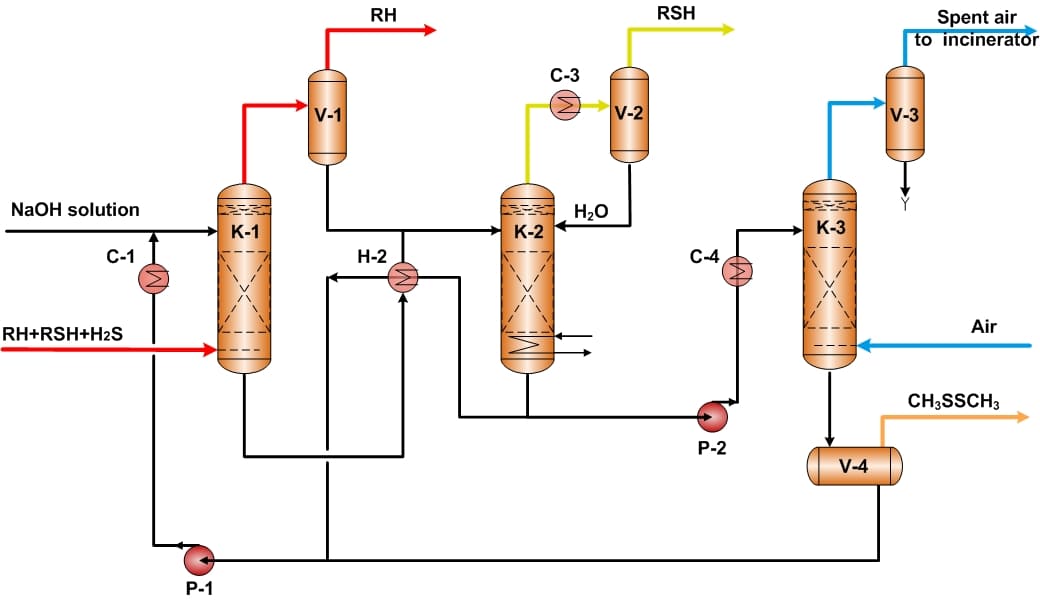
The DMD-2M process is designed for the treatment of gas condensate and light hydrocarbon fractions to remove hydrogen sulfide (H₂S) and light C₁–C₄ mercaptans.
One of the important features of this technology is the possibility of separating naturally occurring mercaptan mixtures as a potentially marketable product.
The recovered mercaptan mixture can be used as an odorant for natural gas and liquefied hydrocarbon gases.
DMD-3 Process: Treatment of Straight-Run and FCC Gasoline
Application of the DMD-3 Process
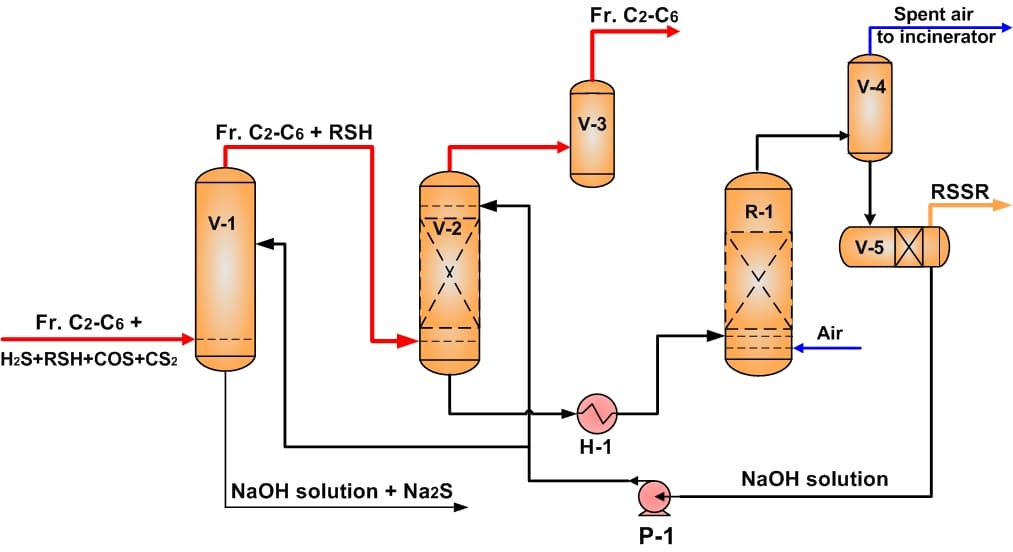
The DMD-3 process is designed for the treatment of:
Straight-run gasoline
Fluid catalytic cracking (FCC) gasoline
This technology is particularly suitable for feedstocks containing high levels of mercaptan sulfur.
The main objectives of the process are:
Removal of H₂S
Reduction of mercaptans
Improvement of final product quality
DMD-4 Process: Treatment of Pentane–Hexane Fractions
Application of the DMD-4 Process
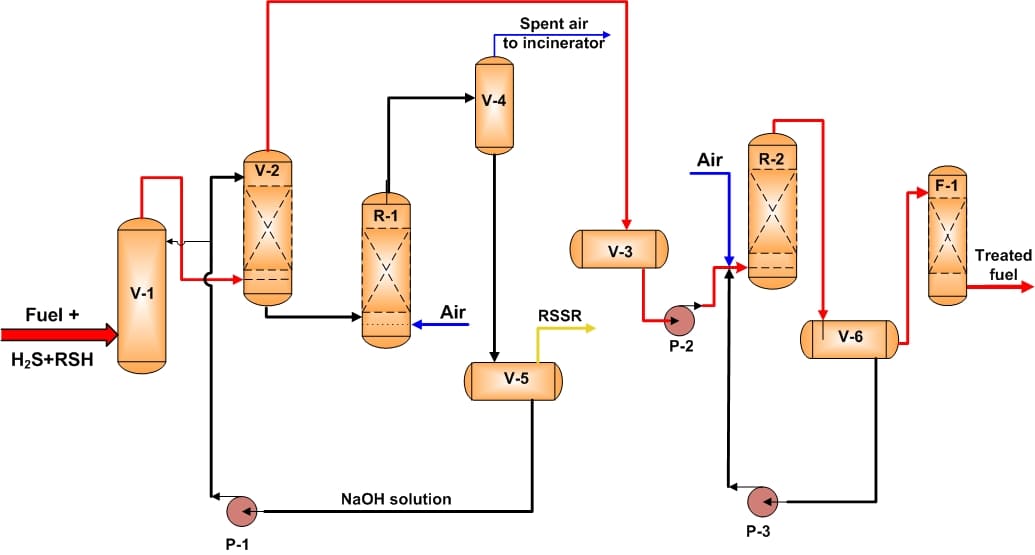
The DMD-4 process is used to remove sulfur compounds from light hydrocarbon fractions, particularly:
Mercaptans
Dimethyl sulfide
in pentane–hexane fractions.
This technology enables the production of higher-quality products suitable for downstream applications.
Features of Liquefied Hydrocarbon Gas Desulfurization Units
DMD units for LHG treatment are designed to provide effective removal of H₂S and mercaptans, reduce residual sulfur compounds, and support production in accordance with quality requirements such as EN 589.
In these units, the hydrocarbon stream enters the treatment column, while an alkaline solution containing the catalyst is introduced from the upper section of the column to provide effective contact and removal of sulfur compounds.
Following treatment, the purified hydrocarbon stream leaves the top of the column, while the residual H₂S concentration can be continuously monitored.
Advantages of DMD Technology
The main features and advantages of DMD technology include:
Compact unit design
Easy installation and operation
Suitable catalyst service life
Compatibility with different feedstocks
Reduced generation of hazardous waste
Ability to comply with environmental requirements
IVKAZ Catalyst in Desulfurization Processes
IVKAZ is a highly active modified phthalocyanine catalyst developed for various sweetening and desulfurization processes.
The catalyst can be considered as an alternative to phthalocyanine catalysts used in technologies such as:
Merox WS
ARI 100-EXL
Applications of IVKAZ Catalyst
Crude Oil and Gas Condensate Treatment: Removal of H₂S and mercaptans
LPG Treatment: Reduction of sulfur compounds
Straight-Run and FCC Gasoline Treatment: Reduction of mercaptan sulfur
Light Hydrocarbon Fraction Treatment: Removal of H₂S and light mercaptans
Pentane–Hexane Fraction Treatment: Removal of mercaptans
Sulfur-Alkaline Wastewater Treatment: Caustic regeneration and removal of sulfur compounds
Heavy Oil Treatment: Ammonia-catalytic treatment for the removal of H₂S and mercaptans
Conclusion
DMD technologies provide a range of specialized solutions for the treatment of liquefied hydrocarbon gases, gas condensates, and light petroleum fractions.
By utilizing the IVKAZ catalyst, these processes enable effective removal of hydrogen sulfide and mercaptans and support the production of hydrocarbon products that comply with quality requirements such as EN 589.
AAprolab
AAprolab serves as the exclusive representative for the production of IVKAZ catalyst under license from VNIIUS and IVKAZ, Russia. Through the supply of IVKAZ catalysts and associated process technologies, AAprolab provides specialized solutions for the refining, petrochemical, and gas-processing industries.